
Every customer interaction tells a story. But without the right visualization, those stories remain hidden in spreadsheets and analytics dashboards. In 2026, AI-powered customer journey mapping is revolutionizing how marketing teams understand, optimize, and transform customer experiences - turning complex data into clear visual narratives.
Understanding the Customer Journey: From Awareness to Retention
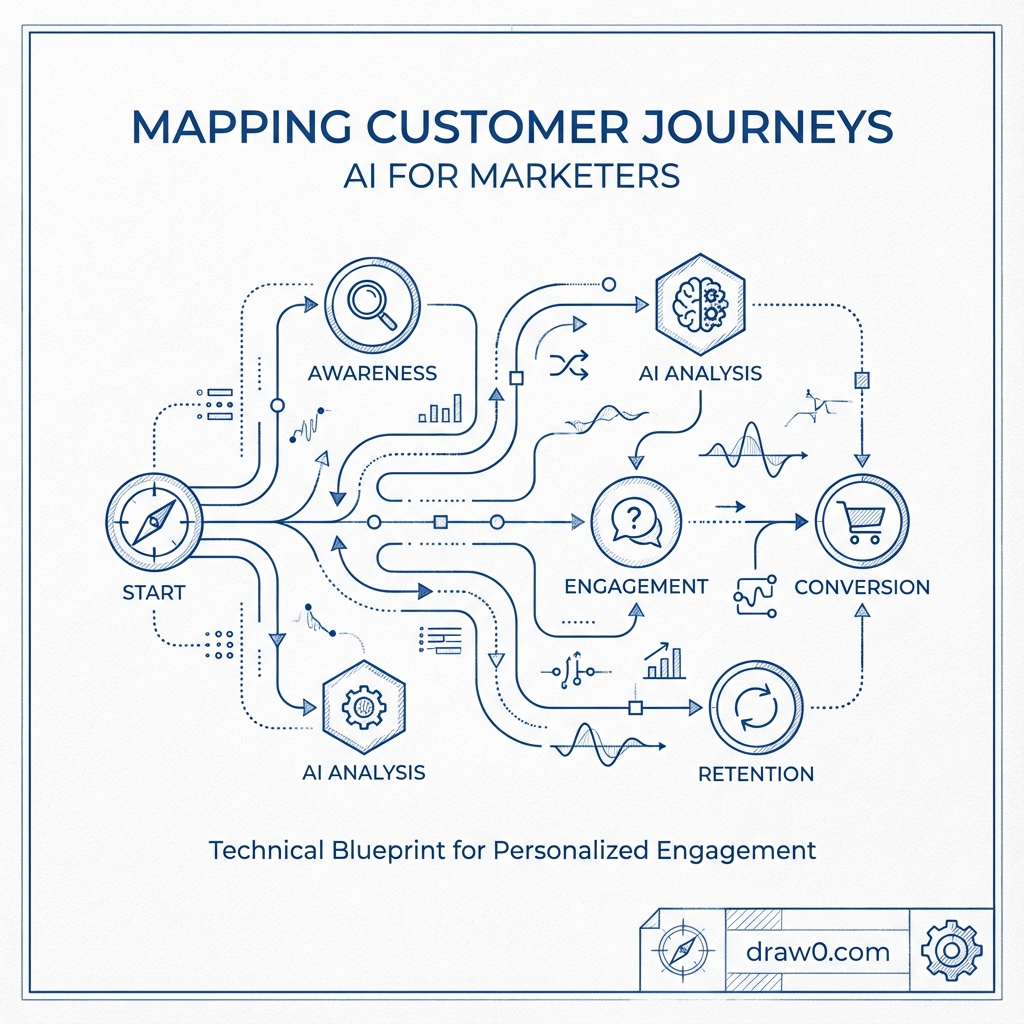
A customer journey map is a visual representation of every interaction a customer has with your brand, from the moment they first discover you until they become loyal advocates (or churn). Unlike a simple marketing funnel that focuses on conversion, journey maps capture the full emotional and experiential arc.
The typical customer journey consists of five core stages:
- Awareness: Customer discovers your brand through social media, search, ads, or word-of-mouth
- Consideration: They research options, compare competitors, read reviews, and evaluate if you solve their problem
- Decision/Purchase: They choose your product and complete the transaction
- Retention: Post-purchase experience, support interactions, and ongoing product usage
- Advocacy: Delighted customers become promoters who refer others and leave positive reviews
According to recent research, customer journey mapping helps businesses "see every step a customer takes when interacting with a brand, letting companies identify weak links, improve key interactions, and build stronger connections." This visualization reveals what motivates customers at different points—their needs, questions, and pain points—allowing you to tailor messaging and offers to be most relevant.
Visualizing Touchpoints and Pain Points
A touchpoint is any moment where a customer interacts with your brand. Modern customer journeys can involve 20+ touchpoints across multiple channels:
- Digital: Website, mobile app, social media, email, chatbots, online ads
- Physical: Retail stores, events, product packaging, direct mail
- Human: Sales calls, customer support, account management, community forums
Each touchpoint can either move the customer forward or create friction. Pain points are the obstacles, frustrations, and moments of confusion that cause customers to abandon their journey. Common pain points include:
- Information gaps: Customer can't find pricing, shipping times, or product specifications
- Process friction: Complicated checkout flows, required account creation, too many form fields
- Channel discontinuity: Information doesn't transfer between touchpoints (e.g., rep doesn't know about chat history)
- Emotional misalignment: Marketing promises don't match product reality
- Response delays: Long wait times for support or unclear return policies
Visual journey maps make these pain points immediately obvious. When you see a customer path that shows "visited pricing page 5 times before calling sales," you've identified friction that needs addressing.
"Customer journey mapping enhances post-purchase experiences to increase customer satisfaction and loyalty, revealing patterns that trigger loyalty and growth."
How to Use AI to Generate Comprehensive Journey Maps
Traditional journey mapping requires weeks of research: customer interviews, data analysis, stakeholder workshops, and manual diagram creation. AI changes this completely.
Modern AI customer journey mapping tools can generate comprehensive maps in minutes by:
1. Start with Persona Descriptions
Instead of manually drawing touchpoints, you describe your customer persona and goals to the AI:
"Create a customer journey map for Sarah, a 35-year-old marketing manager at a B2B SaaS company. She's looking for project management software to coordinate her remote team of 8 people. Her main concerns are ease of onboarding, integration with Slack and Google Workspace, and clear pricing without hidden fees. She has a budget of $100/month and needs to present ROI to her VP within 30 days."
The AI processes this description and automatically generates touchpoints, emotional states, and potential pain points specific to this persona.
2. Analyze Data from Multiple Sources
Advanced AI journey mapping tools integrate with your existing analytics platforms to automatically identify patterns:
- Web analytics: Page flow, time on page, bounce rates, conversion funnels
- CRM data: Deal stages, email engagement, support ticket history
- Support transcripts: Common questions and frustration points extracted via NLP
- Survey responses: Sentiment analysis revealing emotional journey
According to HubSpot's research on AI journey mapping, "Machine learning algorithms can identify patterns, segment customers, and highlight key touchpoints by analyzing customer data across interactions."
3. Generate Visual Maps with Suggested Improvements
AI doesn't just create diagrams—it recommends optimizations. For example, if data shows 40% of users abandon at the pricing page, the AI might suggest:
- Adding a pricing calculator widget
- Implementing exit-intent offers
- Creating comparison charts with competitors
- Adding customer testimonials specific to pricing concerns
Pro Tips for AI Journey Mapping
- Be specific about context: Include industry, company size, budget, and timeline constraints
- Define success metrics: Tell the AI what "conversion" means for your business
- Include competitive context: Mention alternatives customers are considering
- Specify channel preferences: Does your audience prefer email, phone, chat, or self-service?
- Highlight known pain points: Share what you already know from customer feedback
Analyzing the Flow: Identifying Drop-Off Points Visually
The power of visual journey maps is making complex data immediately understandable. When you see the customer path laid out visually, drop-off points jump out.
Common Drop-Off Patterns
The "Browse-but-Never-Buy" Pattern: High traffic to product pages but low add-to-cart rates. Usually indicates pricing confusion, lack of social proof, or missing critical information.
The "Cart Abandonment" Pattern: Items added to cart but checkout never completed. Often caused by unexpected shipping costs, complicated checkout flows, or lack of payment options.
The "One-and-Done" Pattern: Customers purchase once but never return. Signals poor onboarding, unmet expectations, or lack of engagement strategies.
The "Support Loop" Pattern: Customers contact support multiple times about the same issue. Indicates product complexity or inadequate self-service resources.
Using Funnel Visualization Tools
Tools like Funnelytics provide real-time funnel visualization, showing you "which paths drive the most conversions" and where customers are getting stuck. When combined with journey maps, you get both the quantitative drop-off data and the qualitative "why" behind it.
Research from Statsig shows that "clear, easy-to-understand funnel visualizations help you quickly spot trends, anomalies, and opportunities for optimization" - turning raw analytics into visual insights your entire team can understand.
Sharing Diagrams with Sales and Product Teams
The real value of customer journey maps emerges when they become living documents that inform cross-functional decisions.
For Sales Teams
- Objection handling: Journey maps reveal common concerns at each stage, letting reps prepare targeted responses
- Qualification criteria: Understanding where prospects drop off helps refine lead scoring
- Personalized outreach: Knowing the exact content prospects engaged with enables relevant conversations
- Deal acceleration: Identifying typical buying journey duration helps prioritize hot opportunities
For Product Teams
- Feature prioritization: Pain points with highest impact on journey abandonment get top priority
- Onboarding optimization: Visual maps of first-week user experience reveal where new users get lost
- Integration roadmap: Touchpoint analysis shows which third-party tools matter most to customers
- Success metrics: Journey completion rates become key product health indicators
Creating a Single Source of Truth
Export your AI-generated journey maps to collaboration platforms like Miro, Notion, or Confluence. Tools like Miro's Customer Journey Mapping enable real-time collaboration where teams can add notes, propose experiments, and track improvements directly on the map.
Many teams run quarterly "journey review" sessions where marketing, sales, product, and support analyze updated maps together, aligning on the highest-impact improvements.
The Marketing Funnel vs. Customer Journey: Better Together
While traditional marketing funnels focus on conversion rates at each stage (awareness → consideration → decision), customer journey maps add the human dimension: emotions, motivations, and experiences.
As marketing experts at Kurve explain, "The marketing funnel and customer journey enrich each other to provide a better and more wholesome view of the customer."
- Funnels tell you what is happening (30% drop-off at checkout)
- Journeys tell you why it's happening (checkout requires account creation, causing friction)
The most effective marketing teams use both: funnels for measurement and journey maps for understanding.
Real-World AI Journey Mapping Success
A B2B SaaS company used AI journey mapping to discover that 60% of trial users never completed the critical "first project" milestone. The journey map revealed that users got stuck on data import—a step the team assumed was simple.
By visualizing the exact moment of abandonment and correlating it with support tickets, they redesigned the import flow and added contextual help. Trial-to-paid conversion increased by 34% within two months.
An e-commerce retailer mapped the journey of cart abandoners and discovered that 45% returned to purchase within 7 days—but from a different device. This insight led them to implement cross-device cart synchronization and retargeting emails timed to the typical return window, recovering 22% of previously lost sales.
Get Started with AI Customer Journey Mapping
Ready to visualize your customer experience and unlock growth opportunities? AI-powered journey mapping tools like Draw0 let you create comprehensive customer journey maps in minutes, not weeks.
Simply describe your customer persona, their goals, and their journey stages in natural language. The AI generates a complete visual map showing touchpoints, emotions, pain points, and opportunities for optimization. Refine the map through conversation, export to your favorite collaboration tool, and share with your entire organization.
Whether you're a marketing manager optimizing conversion rates, a product leader improving user onboarding, or a customer success team reducing churn, AI journey mapping gives you the visual clarity to make data-driven decisions that actually improve customer experience.
Stop guessing where customers drop off. Start seeing their entire journey.